
You work hard, but construction sites don’t always return the favor. I can’t tell you how many times a client has walked into my office shaking their head, saying the same thing I’ve heard for decades:
“I told them it wasn’t safe. They told me to do it anyway.”
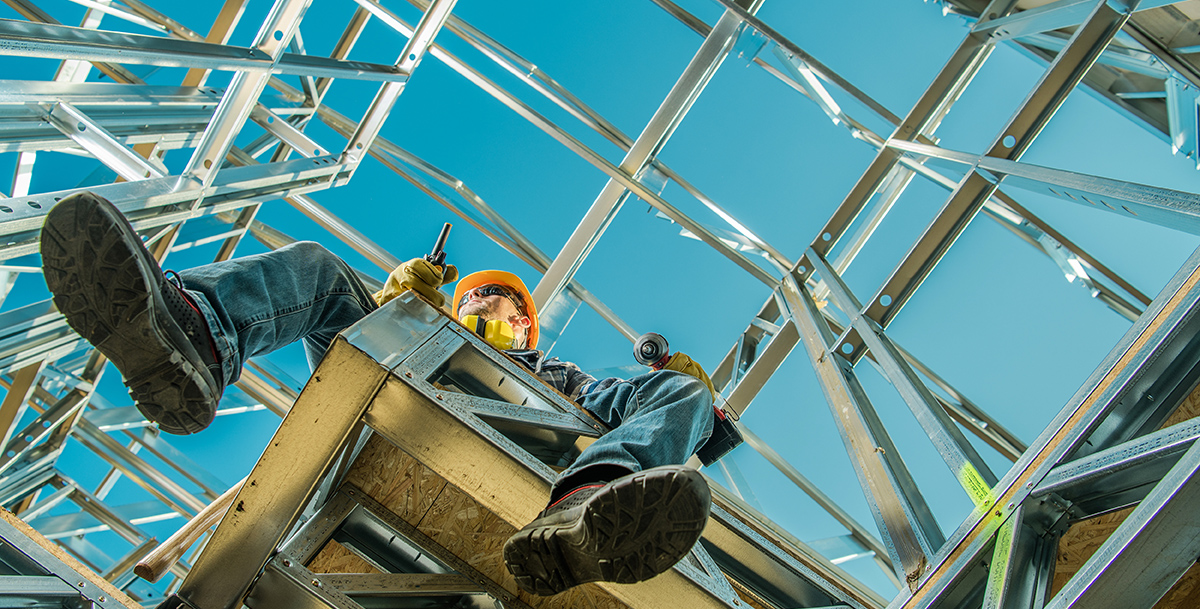
If you work construction in the Bronx, you already know the pressure. Deadlines. Overtime cuts. Foremen who think a roll of duct tape is the solution to every equipment problem. And when you’re working twenty feet up on a ladder or scaffold, those shortcuts become injuries. Serious ones.
And here’s the part most workers don’t realize until after the fall: the type of equipment you were on matters just as much as the fall itself.
The Reality of Ladder vs. Scaffold Falls
When someone calls my office and says, “I fell,” my first question isn’t how far. It’s not even how badly you’re hurt.
It’s:
“What were you standing on?”
Because in New York, a ladder fall and a scaffold fall are related, but one has a bigger legal footprint than the other.
And understanding that difference is the key to protecting yourself.
A Plain-English Walkthrough of Labor Law 240 (The Scaffold Law)
Let me break this down the same way I do when a client is sitting across from me with a cast on their arm and ice on their back.
Labor Law 240 says this:
If you work at height — even a few feet — your employer, the site owner, and the general contractor must give you the right equipment to keep you safe.
No shortcuts.
No excuses.
No “it’s only gonna take a minute.”
The law covers:
-
Ladders
-
Scaffolds
-
Ropes
-
Harnesses
-
Hoists
-
Pulleys
-
Secure platforms
-
Safety lines
If any of those are missing, broken, unstable, or not set up properly and you get hurt, the people who control the site are responsible. Not you.
I’ve had cases where guys were blamed for everything from not “balancing” right to being “too heavy” for a ladder. Courts didn’t buy it. The law protects the worker, not the story that’s made up afterward.
Ladder Falls: The Quiet, Everyday Danger
Ladder falls are some of the most common cases I see. Why? Because ladders are treated like the microwave in a breakroom: nobody takes care of them, everyone uses them, and half the pieces are missing.
Let me give you an example.
I heard of an incident a few years ago, where a worker was painting crown molding in an apartment complex. They handed him a ladder that looked like it survived three hurricanes. It was warped, the rubber feet were gone, and the hinges were loose.
He complained, but the foreman said, “It’s fine. Just don’t lean too hard.”
Two hours later, he was in the ER.
That ladder didn’t “accidentally” slide. It failed because his employer refused to replace a $70 piece of equipment. And under Labor Law 240, that meant there was a strong case.
Why Ladder Cases Are Unique
With ladders, the failures are usually:
-
No one securing it
-
Wrong height
-
Old or damaged equipment
-
Uneven surface
-
Worker carrying materials up it
-
Ladder shifting because no one was assigned to hold it
But the key is this: ladders don’t fail on their own. They fail because someone didn’t do their job.
And when that happens, the law is on your side.
Scaffold Falls: Bigger Structure, Bigger Responsibility
Scaffold cases are different animals. They don’t just involve a single tool, they involve an entire structure. And honestly, some of the most heartbreaking cases I’ve handled involved scaffold failures.
One that still sticks with me:
A young guy fell when the planks beneath him gave way. He had no guardrails, no harness, and the scaffold hadn’t been inspected in days. The site was rushing to finish a project, and the supervisors decided speed mattered more than safety.
He did nothing wrong. He was doing exactly what he was told, on equipment that had no business being used.
Why Scaffold Cases Hit Harder
With scaffolds, we often see:
-
Missing planks
-
No guardrails
-
Broken cross-bracing
-
Platforms not tied into the building
-
Overloaded sections
-
Makeshift repairs
-
Zero inspection logs
-
Half-completed setups workers are told to “deal with”
And when a scaffold fails, it fails big. Falls aren’t from four feet up, they can be from twenty, thirty, forty feet. The injuries are life-changing.
Legally, scaffold cases almost always point directly to liability because the structure requires so much setup, planning, and oversight. Corners cut at that level are not subtle, they’re dangerous.
Why the Type of Fall Changes the Case Strategy
Ladder cases and scaffold cases both fall under Labor Law 240, but the evidence I hunt for is completely different.
In Ladder Cases, I’m Looking For:
-
Condition of the ladder
-
Whether it was secured
-
Whether a second person was assigned
-
Whether you were forced to improvise
-
Whether the surface was unsafe
-
Whether the ladder was the wrong height
-
Whether you were carrying heavy tools
Even the shoes you were wearing can matter, not because it’s your fault, but because it shows you weren’t the problem.
In Scaffold Cases, I’m Digging For:
-
Plank integrity
-
Guardrails or the lack of them
-
Whether the scaffold was tied in
-
Who assembled it
-
Whether it matched OSHA and NY standards
-
Inspection logs
-
Weight limits
-
Whether pieces were missing or makeshift
And here’s something I tell every client:
If the equipment was changed or “fixed” after your fall, that’s a huge red flag, and very often it’s proof someone knew the setup wasn’t safe.
How You Know Your Fall Was Caused by Improper Equipment or Safety Violations
When someone sits across from me, I walk them through this checklist. And I’ll be honest, most people hit two or three items before I’m even finished reading.
Here’s the Signs I Look For:
-
Equipment looked old, shaky, or damaged
-
You were told to “make do” with what was available
-
No one secured the ladder or scaffold
-
No guardrails, no harnesses, no tie-offs
-
You were working alone on a task that needed a second person
-
The site was behind schedule and rushing
-
Foreman dismissed safety concerns
-
Equipment was suddenly “fixed” after your fall
If any of these happened, your case is likely stronger than you think.
What You Should Do After a Ladder or Scaffold Fall (Simple Checklist)
You don’t need a legal degree, you need a plan. Here’s the one I give my clients:
1. Get medical care right away even if you think you’re okay.
Falls hide injuries.
2. Get photos of the equipment and the area.
If you can’t do it, ask a coworker you trust.
3. Get the names of witnesses.
People get reassigned. They get fired. They disappear. Names are gold.
4. Don’t let anyone pressure you into writing a “blame myself” report.
They love doing this. Don’t fall for it.
5. Call an attorney who handles these exact cases.
Ladder and scaffold cases move fast, and evidence disappears even faster.
Final Word From Someone Who’s Seen Too Many Preventable Falls
I’ve been doing this a long time. I’ve sat with workers who couldn’t go back to their trade. I’ve seen grown men embarrassed to tell me a ladder slipped because they’ve been told their whole lives to just “tough it out.”
Let me say this clearly: Falls from height are not your fault.
They’re the result of unsafe equipment, skipped inspections, and pressure to rush.
And whether you fell from a ladder or a scaffold, the law is built to protect you, and I’m here to make sure it does.
If You Would Like To Find Out More About Having Getz & Braverman, P.C. Represent You Or Provide Legal Advice, Email, Live Chat, Or Call Us At 718-618-5567. We Also Accept Text Messages At 917-734-7583.
There are many sources of legal information available online. These articles and information on our blog and website do not constitute legal advice. “Attorney Advertising” and prior results do not guarantee a similar outcome. We adhere to all confidentiality requirements, but until we have accepted your case, no attorney-client privilege is established. The choice of selecting an attorney is an important personal decision that should be carefully considered. If you need legal advice, please contact an attorney directly.
Some of the case summaries, reports of past results and individual lawyer biographies on this website describe past matters handled for clients of the Firm. These descriptions are meant only to provide information to the public about the activities and experience of our lawyers. They are not intended as a guarantee that the same or similar results can be obtained in every matter undertaken by our lawyers.

