
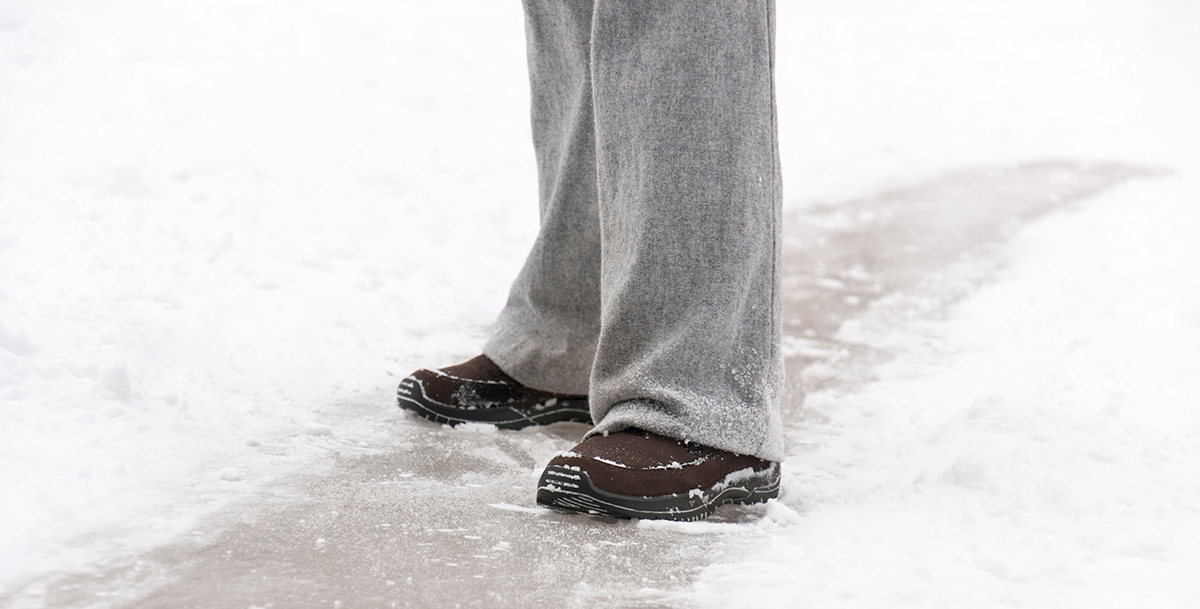
A few winters ago, I spoke with someone who had slipped and fallen outside a grocery store just after a snowstorm. She had parked her car, walked toward the entrance, and never made it to the door. The pavement looked wet, not icy. But a thin layer of refrozen meltwater sent her feet out from under her before she knew what was happening.
She broke her wrist and hit her head hard enough to require a hospital visit. What stuck with her afterward wasn’t just the injury. It was the confusion. She kept asking the same question: “If it was winter does that mean the store is responsible for the accident?”
That assumption comes up constantly in slip-and-fall cases. Accidents in winter feel avoidable if proper precautions and maintenance are handled by property owners. But others feel snow, ice, freezing temperatures are an act of nature no one can control. But legally, winter doesn’t erase responsibility. In many cases, it increases it.
Why winter doesn’t automatically excuse property owners
There’s a common belief that property owners aren’t responsible for injuries caused by snow or ice because winter conditions are expected. That belief doesn’t hold up under the law.
Property owners and managers have a legal duty to take reasonable steps to keep their premises safe. That duty doesn’t disappear when the temperature drops. It changes to reflect the conditions. Reasonable winter maintenance may include plowing, salting, shoveling, sanding, or otherwise addressing known hazards within a reasonable amount of time.
Accidents in winter aren’t judged by whether snow existed. They’re judged by whether the owner or manager acted reasonably in response to it.
The concept of “reasonable time” after a storm
One of the most misunderstood issues in winter slip-and-fall cases is timing.
Property owners are generally not expected to clear snow or ice while a storm is actively ongoing. Courts recognize that it’s unrealistic to keep surfaces perfectly clear during continuous snowfall or freezing rain. This is sometimes referred to as the “storm in progress” rule.
But once the storm ends, the clock starts.
At that point, owners are expected to take action within a reasonable time. What’s considered reasonable depends on several factors, including the severity of the storm, the type of property, the amount of foot traffic, and the steps taken to address the conditions.
If a storm ended hours earlier and nothing was done to address icy walkways or entrances, responsibility may attach.
Slips caused by refreezing and melting
Some of the most dangerous conditions don’t happen during a storm at all. They happen afterward.
Melting snow during the day can refreeze overnight, creating black ice on sidewalks, parking lots, and entryways. Roof runoff can drip onto walkways and freeze. Plowed snowbanks can melt and spread water across paths that later turn to ice.
These conditions are especially important in accidents in winter because they’re often predictable. Property owners are expected to be aware that melting and refreezing occurs and to address it.
When someone slips on ice created by runoff or refreezing, the question becomes whether the condition was foreseeable and whether reasonable steps were taken to prevent it.
Sidewalks, parking lots, and store entrances
Different areas of a property can create different hazards, and each comes with its own expectations.
Store entrances are high-traffic areas. Owners know people will be walking in and out, tracking snow and water inside. Mats, warning signs, and regular maintenance are expected. A wet, icy entryway that’s left unattended can quickly become dangerous.
Parking lots present their own challenges. Uneven surfaces, plowed snow piles, and poor lighting can all contribute to falls. Simply plowing isn’t always enough. Ice left behind after plowing may still need treatment.
Sidewalks, especially those adjacent to businesses or apartment buildings, are another common source of winter injuries. In many areas, property owners are responsible for maintaining the sidewalks in front of their premises, including snow and ice removal.
Accidents in winter often happen in places people use every day, which makes the injuries all the more frustrating, and the responsibility easier to overlook.
What about private homes?
People often assume slip-and-fall cases only apply to businesses. That’s not always true.
Homeowners can be responsible for injuries that occur on their property, particularly when guests are invited or expected. If a homeowner knows — or should know — about a dangerous condition and fails to address it, liability may arise.
That doesn’t mean every slip on a friend’s icy walkway leads to a lawsuit. But legally speaking, winter conditions don’t automatically shield homeowners from responsibility.
The role of notice and knowledge
A key issue in slip-and-fall cases is notice. Did the property owner know about the condition, or should they have known?
Actual notice means the owner was aware of the hazard. Constructive notice means the condition existed long enough that the owner should have discovered it through reasonable inspections.
In accidents in winter, this often comes down to timing. How long had the ice been there? Was there a maintenance schedule? Were inspections performed? Were complaints made?
These details matter, and they often determine whether a case moves forward.
“I should have been more careful”
Many injured people blame themselves after a winter fall. They say they should have walked differently, worn different shoes, or been more cautious.
That instinct is understandable, but it doesn’t automatically end the legal analysis.
Yes, people are expected to exercise reasonable care for their own safety. But that doesn’t eliminate a property owner’s duty to maintain safe conditions. In many cases, responsibility is shared.
Accidents in winter often involve comparative fault, where both parties’ actions are evaluated. Being careful doesn’t mean you assume all the risk of someone else’s negligence.
Documentation matters more than people realize
One of the challenges with winter slip-and-fall cases is that conditions change quickly. Ice melts. Snow gets plowed. Hazards disappear.
That’s why documentation is critical. Photos of the area, witness information, incident reports, and medical records all help establish what the conditions were at the time of the fall.
Many people don’t think to document anything because they assume nothing can be done. By the time they realize otherwise, the evidence is gone.
Why accidents in winter are often dismissed too quickly
Slip-and-fall cases already face skepticism. Add winter weather, and many people assume there’s no case at all.
That assumption causes injured people to walk away from valid claims, absorb medical costs, miss work, and deal with long-term pain without realizing they may have legal options.
Winter makes accidents more common, not less meaningful. The law doesn’t treat snow and ice as automatic excuses. It treats them as conditions that require care and attention.
The bigger takeaway
Winter injuries aren’t just about bad luck. They’re about whether someone took reasonable steps to prevent a known hazard.
Accidents in winter happen fast, but responsibility is evaluated slowly and carefully. Timing, maintenance, notice, and foreseeability all matter.
If you’ve been injured in a winter slip or fall, it’s worth understanding how fault is actually determined — not just assuming the season answers the question.
The bottom line
Snow and ice don’t eliminate responsibility. They change what responsibility looks like.
If a property owner failed to take reasonable steps to address a dangerous winter condition, they may be held accountable for the injuries that result. Each case depends on its facts, but winter alone is never the whole story.
And if you’re unsure whether what happened to you was “just an accident,” that question is often worth asking before you assume the answer.
If You Would Like To Find Out More About Having Getz & Braverman, P.C. Represent You Or Provide Legal Advice, Email, Live Chat, Or Call Us At 718-618-5567. We Also Accept Text Messages At 917-734-7583.
There are many sources of legal information available online. These articles and information on our blog and website do not constitute legal advice. “Attorney Advertising” and prior results do not guarantee a similar outcome. We adhere to all confidentiality requirements, but until we have accepted your case, no attorney-client privilege is established. The choice of selecting an attorney is an important personal decision that should be carefully considered. If you need legal advice, please contact an attorney directly.
Some of the case summaries, reports of past results and individual lawyer biographies on this website describe past matters handled for clients of the Firm. These descriptions are meant only to provide information to the public about the activities and experience of our lawyers. They are not intended as a guarantee that the same or similar results can be obtained in every matter undertaken by our lawyers.

