
I met up with a friend recently who was telling me about a near-miss accident he almost had. He was driving home from a Feast of Seven Fishes party on Christmas Eve. On his way to the party around 6pm, the roads were fine. But when he got back on the road around midnight to head back home, that 20-mile drive became treacherous as he drove north into colder temps.
Luckily for him, there was almost no one on the road. He could feel his tires starting to lose grip on the pavement, so he backed off on his speed slowly in anticipation of worse conditions.
As my friend approached a gas station, another car pulled right out into the roadway. It’s a scene we see every day: a driver isn’t paying attention to the cars already in their lane, or they just don’t care if someone will be forced to brake to let them in. It’s frustrating on a good day, but on a black-ice night that lack of consideration or awareness can be deadly.
Despite my friend’s already slow speed, he was forced to brake to avoid striking the car. His vehicle (a Jeep Wrangler), started to slow-motion rotate on the ice. No amount of braking elegance could have prevented the slide. Fortunately, it was on a road without any traffic, and no steep ditches, so he eventually came to rest in a patch of grass. Had he been driving any faster or braked harder, the story could have ended differently.
So who was at fault if this had resulted in an injury or damage? Was it my friend for failing to control his speed despite the ice? Or was it the other driver that senselessly created a dangerous condition? There’s a lot to unpack.
When we talk about accidents in winter, the instinct is to blame the weather. Snow, ice, freezing rain, and poor visibility feel like outside forces that no one can control. But legally speaking, weather doesn’t eliminate responsibility. In many cases, it increases it.
Why weather doesn’t eliminate responsibility in accidents in winter
There is a common belief that icy roads create “no-fault” situations, where accidents are simply unavoidable. That belief doesn’t hold up under the law. Drivers are expected to operate their vehicles reasonably under the conditions they’re facing. When the weather is bad, that expectation doesn’t disappear. It becomes more demanding.
Courts and insurance companies look at whether drivers adjusted their behavior for winter conditions. That includes reducing speed, increasing following distance, braking earlier, and recognizing that traction may be limited even when the road looks clear. Black ice, in particular, is well known in colder climates, which means drivers are expected to anticipate it, not be surprised by it.
In accidents in winter, the presence of snow or ice doesn’t excuse a mistake. Instead, it raises the question of whether the driver took appropriate precautions given what they knew or should have known at the time.
Sliding on ice and rear-end collisions
One of the most common winter accident scenarios involves a driver sliding into the back of another vehicle. The explanation is almost always the same: “I tried to stop, but the road was icy.”
From a legal standpoint, that explanation rarely shifts fault.
In most cases, the driver who rear-ends another vehicle is presumed to be at fault, even in winter conditions. The reasoning is straightforward. Drivers are expected to leave enough space to stop safely based on the conditions. If the road is icy, that means more distance, slower speeds, and greater caution.
The ice explains why the vehicle didn’t stop as quickly as expected. It doesn’t explain why the vehicle was close enough to hit the car in front. In accidents in winter, that distinction matters. Fault is usually tied to the decision-making that occurred before the loss of control, not just the loss of control itself.
There are exceptions. If the lead vehicle stopped suddenly without reason, or if another factor intervened, fault can shift. But those cases depend heavily on the specific facts, and they are far less common than people assume.
When another driver pulls out and forces sudden braking
Winter accidents become more complicated when the driver who loses control wasn’t the one who initiated the dangerous situation. My friend had already reduced speed to anticipate lack of braking ability. But was it enough? Or was the other driver’s lack of awareness and courtesy the causal factor?
When a driver pulls out of a gas station, driveway, or side street and fails to yield the right-of-way, forcing other drivers to quickly brake, that driver may actually be at fault, even if ice is involved. Weather does not give anyone permission to pull into traffic when it isn’t safe to do so. When other vehicles must brake to allow a car to enter the roadway, that driver is creating the dangerous situation. What if the approaching car cannot stop in time to avoid hitting the entering car? When a driver pulls out in front of vehicles already moving, they are putting A LOT of faith in the other driver’s awareness, reaction speed, tire tread quality, and that they’re not fiddling with their Spotify playlist or shushing unruly kids. Or DRIVING ON ICE.
In my friend’s Christmas Eve scenario, the critical issue wouldn’t have been the black ice alone. It would have been whether the driver pulling out exercised reasonable judgment under winter conditions. Pulling into traffic when roads are slick increases the risk that another driver won’t be able to stop in time, even if they’re driving carefully.
In accidents in winter, fault often turns on who created the emergency situation. If one driver forces another into sudden braking or evasive action, the responsibility may rest with the driver who initiated that chain of events, not the one who lost traction. And with the number of security cameras scattered across the city, including cameras at gas stations, my friend could have easily gained access to cameras that would have both identified the car that pulled out in front of them, the identity of the driver, and possibly even captured the entire scene.
Near misses and why they matter
Because my friend didn’t hit anything, it’s easy to treat the incident as a non-event. But near misses are often the best teaching moments when it comes to winter driving and fault.
They show how quickly a normal situation can escalate and how little room for error winter conditions allow. They also reveal how fault would likely be analyzed if circumstances had been slightly different.
Many accidents in winter are only a few feet or a few seconds away from being avoided entirely. Understanding what went wrong before the skid can prevent the same situation from becoming a real accident later.
Accidents in winter during blizzards and severe storms
Blizzards present some of the most dangerous driving conditions, and they often result in multi-car accidents. When visibility is low and roads are covered, chain-reaction crashes become more likely.
Despite how chaotic these accidents can look, fault doesn’t disappear. Investigators and insurance companies look closely at whether drivers adjusted appropriately for the conditions. Speed, following distance, lane changes, and reaction times all come under scrutiny.
In some blizzard-related accidents in winter, fault is shared among multiple drivers. In others, it’s clear that one driver’s actions started the chain reaction. Driving too fast for visibility or following too closely often plays a role.
The severity of the weather doesn’t excuse poor decisions. If anything, it makes those decisions harder to defend.
Choosing to drive in severe winter conditions
Another factor that sometimes comes into play is whether drivers should have been on the road at all. During major storms, travel advisories and emergency warnings may be issued, urging people to stay off the roads unless necessary.
Ignoring those warnings doesn’t automatically make someone at fault, but it can influence how their actions are evaluated after an accident. In accidents in winter, the question often becomes whether the driver exercised reasonable judgment given the known risks.
That doesn’t mean people are expected to predict every hazard. It does mean they’re expected to recognize when conditions are dangerous enough to require extra caution or avoidance altogether. It doesn’t mean they can’t make it to a Christmas party if they have the right vehicle, tires, and driving skills. In my friend’s case, conditions were fine on the way to their host’s house. If he had encountered ice at that time, he would have turned around and headed home. Sometimes you can’t anticipate dangerous conditions until you’re face to face with them.
Snowbanks, plows, and limited visibility
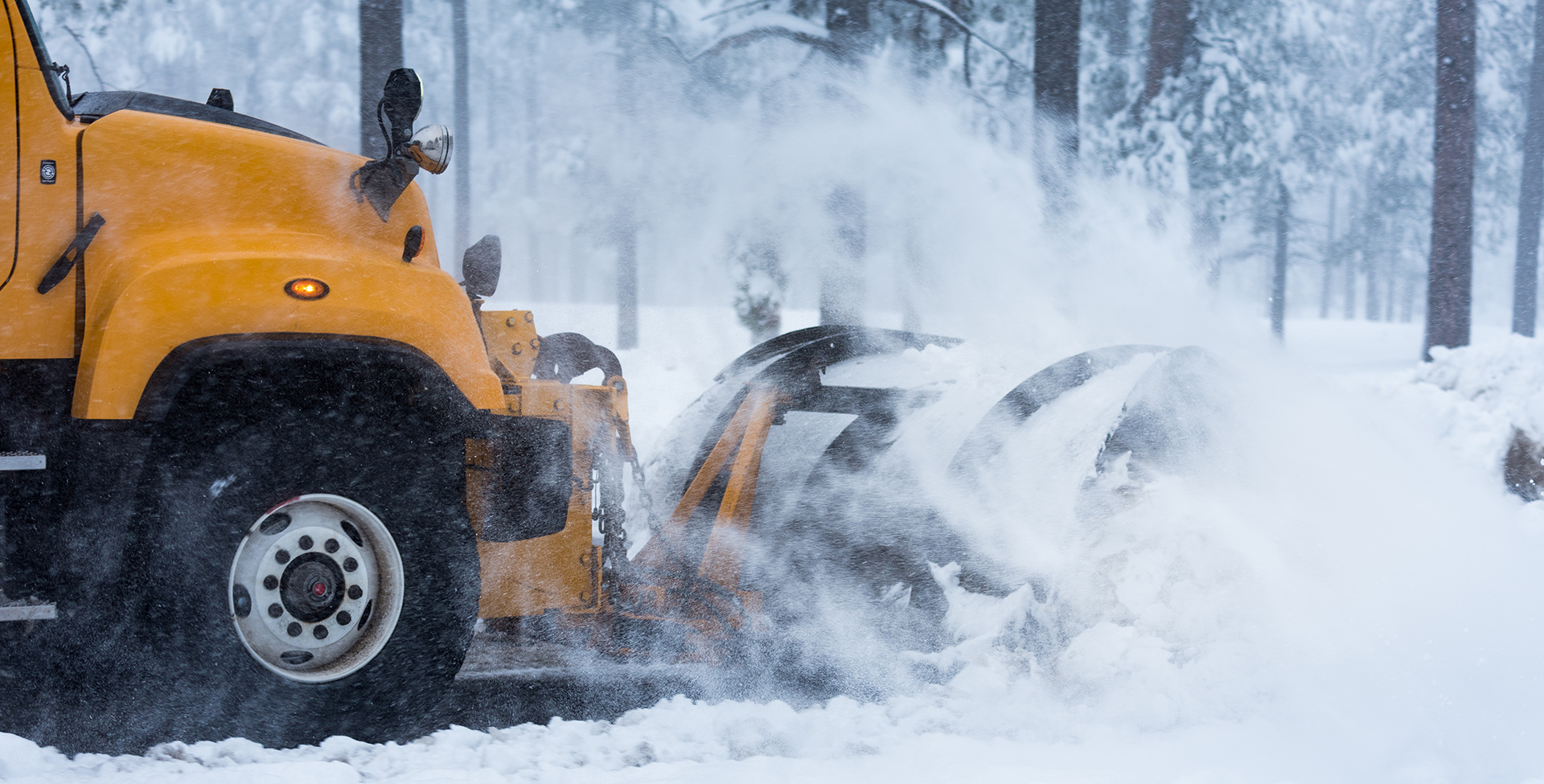
Snowplows are essential in winter, but they can create new hazards by piling snow along roads, driveways, and intersections. These snowbanks often block sightlines, making it harder to see oncoming traffic.
If a snowbank limits visibility and a driver pulls out anyway, responsibility typically remains with that driver. Limited visibility requires patience. Pulling into traffic without a clear view is considered a choice, not an unavoidable outcome.
Many accidents in winter occur because drivers take chances when they can’t see clearly. The presence of snow doesn’t excuse that decision. Drivers are expected to wait until it’s safe to proceed.
Road maintenance and municipal responsibility
Some winter accidents raise questions beyond the drivers involved. If a road wasn’t properly plowed, salted, or treated, liability may extend to the entity responsible for maintaining it.
These cases are complex and highly fact-specific. They depend on timing, weather patterns, notice, and whether reasonable steps were taken to address the conditions. Claims involving road maintenance are very different from typical car accident cases and often involve strict legal requirements and deadlines.
Not every icy road creates municipal liability. But in certain accidents in winter, it’s an issue worth examining.
And I won’t go too deep into another danger: snow plows striking pedestrians. Most of us have heard about actor Jeremy Renner being struck and almost killed by his own snow plow in 2023. While his case was due to an unfortunate series of events while trying to prevent the plow from striking his nephew, there are other cases where a municipal or private plow struck a jogger or walker. A friend of a friend in Connecticut had that happen to her a few years ago.
Why accidents in winter are rarely simple
People often want a clean, simple explanation after a winter accident. “The roads were bad” feels like a satisfying answer, but it’s rarely the full story.
Fault usually comes down to right-of-way, speed relative to conditions, following distance, visibility, and the decisions made before anyone lost control. Ice and snow are part of the environment, but they’re rarely the sole cause.
Accidents in winter are about how drivers respond to known risks. The law focuses less on the weather itself and more on whether drivers acted reasonably in light of it.
The bigger takeaway for winter driving
Winter driving demands more attention, more patience, and more margin for error than most people realize. Many accidents happen not because conditions were extreme, but because drivers treated them as manageable when they weren’t.
Following too closely, pulling out too quickly, or driving as if the road were dry are common mistakes that become much more serious in winter conditions. Other drivers don’t react perfectly. Cars don’t stop on a dime. Ice doesn’t care whether you’re in a hurry.
Understanding how accidents in winter are evaluated can help drivers make better decisions before something goes wrong.
The bottom line
When weather plays a role in an accident, responsibility doesn’t disappear. It becomes more closely examined. Ice and snow may explain how an accident happened, but they don’t automatically determine who is responsible.
If you’re involved in a winter accident or even a close call, the details matter. Where the vehicles were coming from, who had the right-of-way, how fast each driver was going, and what decisions were made before the skid all factor into how fault is determined.
Accidents in winter are unforgiving, but they’re rarely unpredictable. And understanding how fault is actually assessed can make all the difference. Of course, if you are in a winter accident you’re welcome to call me and I can help walk you through how to identify fault and take the case to court if necessary.
If You Would Like To Find Out More About Having Getz & Braverman, P.C. Represent You Or Provide Legal Advice, Email, Live Chat, Or Call Us At 718-618-5567. We Also Accept Text Messages At 917-734-7583.
There are many sources of legal information available online. These articles and information on our blog and website do not constitute legal advice. “Attorney Advertising” and prior results do not guarantee a similar outcome. We adhere to all confidentiality requirements, but until we have accepted your case, no attorney-client privilege is established. The choice of selecting an attorney is an important personal decision that should be carefully considered. If you need legal advice, please contact an attorney directly.
Some of the case summaries, reports of past results and individual lawyer biographies on this website describe past matters handled for clients of the Firm. These descriptions are meant only to provide information to the public about the activities and experience of our lawyers. They are not intended as a guarantee that the same or similar results can be obtained in every matter undertaken by our lawyers.

